- Samplette
- Posts
- Sylvia Robinson: The Overlooked Mother of Hip-Hop 👑
Sylvia Robinson: The Overlooked Mother of Hip-Hop 👑
In honor of Women’s History Month we celebrate the story of Sylvia Robinson, the woman who helped bring hip-hop to the world.
In partnership with


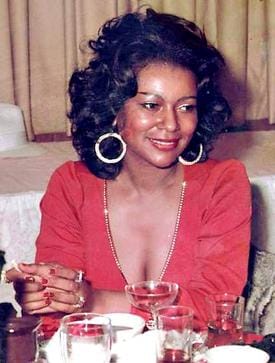
Robinson in 1976
When people tell the story of hip-hop’s origins, the spotlight often falls on DJs spinning at Bronx block parties or legendary MCs who helped shape the culture. But far less often do we hear about Sylvia Robinson, the visionary producer and entrepreneur widely considered the “Mother of Hip-Hop.” Her work behind the scenes laid the business and creative foundations that the global hip-hop industry still stands on today.
Before hip-hop, Robinson was already an accomplished artist. Born Sylvia Vanterpool in Harlem, she first rose to fame in the 1950s as half of the R&B duo Mickey & Sylvia, whose hit “Love Is Strange” became a classic. Later, she scored another major success with her solo hit “Pillow Talk” in 1973.
But Robinson’s most revolutionary contributions would come not as a performer, but as a producer and label founder.
Turning Culture into a Recorded Genre
In the late 1970s, Robinson and her husband founded Sugar Hill Records, one of the earliest labels dedicated to hip-hop. At the time, rap largely existed as a live performance culture at parties and clubs in New York City. Robinson recognized something that the mainstream music industry did not: this emerging style had massive commercial potential.
In 1979, she produced “Rapper’s Delight” by the Sugarhill Gang, the first commercially successful rap single. The song sold more than a million copies and introduced hip-hop to a global audience, helping transform a local cultural movement into a viable music industry.
Robinson also helped release and produce some of the most influential records in early hip-hop history, including:
“The Message” – Grandmaster Flash & The Furious Five (1982), a groundbreaking record that introduced social commentary into rap.
“White Lines (Don’t Don’t Do It)” – Melle Mel (1983), a powerful anti-drug anthem.
“That’s the Joint” – Funky 4 + 1 (1980), a key early hip-hop performance record.
In an industry overwhelmingly dominated by men, Robinson was not just producing music—she was building one of the first hip-hop business models, proving that the culture could thrive commercially and globally.
Despite her enormous impact, Sylvia Robinson’s name is often absent from mainstream conversations about hip-hop’s pioneers. Yet many historians credit her with creating the blueprint for the modern hip-hop label and helping launch careers that shaped the genre’s early sound.
Her influence stretches beyond business decisions. Robinson’s instincts about rhythm, groove, and storytelling helped shape hip-hop’s early sonic identity.
Part of the reason her legacy remained in the background is that Robinson wasn’t the face on stage or the voice on the record. She was the visionary behind the scenes — the executive making the decisions, assembling the artists, and recognizing that hip-hop could live beyond block parties and park jams.
The Samples That Keep Her Music Alive
Robinson’s legacy is not just historical—it is still audible in modern music through sampling.
One of the clearest examples comes from “Funk You Up” (1979) by The Sequence, a group signed to Sugar Hill Records and produced by Robinson. The track became one of the most frequently sampled songs in hip-hop history.
Its influence can be heard across decades of music:
Dr. Dre – “Keep Their Heads Ringin’” (1995) interpolates the track.
En Vogue feat. Ol’ Dirty Bastard – “Whatever (Remix)” (1997) samples it.
Erykah Badu – “Love of My Life (Worldwide)” (2003) incorporates its groove in a tribute to hip-hop.
Even pop artists continue referencing it—Katy Perry’s 2022 song “Did Somebody Say” interpolates the melody.
“The Message” has also been sampled well beyond its generation and can be heard in re-imaginings by contemporary artists like Coi Leray’s “Players”, Keyshia Cole’s “Let it Go” featuring Missy Elliott, and K Michelle’s “Going Under.”
These samples demonstrate how Robinson’s production work continues to echo through contemporary music, often without listeners realizing it.
Remembering the Mother of Hip-Hop
Sylvia Robinson passed away in 2011, but her legacy has grown in recognition. In 2022, she was posthumously inducted into the Rock and Roll Hall of Fame for her role in shaping early hip-hop.
Yet perhaps the best tribute to Robinson is the genre she helped bring to life. Today, hip-hop is the dominant force in global popular music—a cultural movement worth billions of dollars.
And beneath its modern sound, its streaming-era hits, and its global influence, lies a foundation cemented by a Harlem-born visionary who saw the future before anyone else did.
Sylvia Robinson didn’t just participate in hip-hop history—she built it.

Tech moves fast, but you're still playing catch-up?
That's exactly why 200K+ engineers working at Google, Meta, and Apple read The Code twice a week.
Here's what you get:
Curated tech news that shapes your career - Filtered from thousands of sources so you know what's coming 6 months early.
Practical resources you can use immediately - Real tutorials and tools that solve actual engineering problems.
Research papers and insights decoded - We break down complex tech so you understand what matters.
All delivered twice a week in just 2 short emails.